On a warm spring evening in Harrisburg, a cloud of winged insects around a porch light or a windowsill can look harmless. When those insects are subterranean termites, that swarm is the visible part of a colony that has been feeding out of sight, often for years. Green Pest Control handles general pest control in Harrisburg, and termite questions tend to start exactly here, with a homeowner who has never dealt with a swarm before and is not sure what happens next.
This walkthrough covers what a first termite check actually involves, what the signs mean, and what does not help. You do not need to tear anything apart or spray anything before an inspection. In fact, leaving the evidence alone makes the inspection more useful.
What you are actually seeing
Subterranean termites live in the soil and travel into wood to feed. Workers are pale, soft-bodied, and rarely seen in the open. Swarmers are the reproductive form, dark-bodied with two pairs of equal-length wings, and they emerge to start new colonies. In Piedmont North Carolina, swarms most often follow a warm rain in spring, though indoor swarms can happen in winter near heated slabs.
Swarmers are often confused with flying ants. Ants have pinched waists, bent antennae, and wings of unequal length. Termites have straight antennae, a broad waist, and wings that break off easily, which is why a pile of shed wings on a sill is itself a clue. A swarm indoors rarely means termites are living in the room itself. It usually means a colony is in soil or wood nearby and the swarmers found light.
What happens during an inspection, step by step
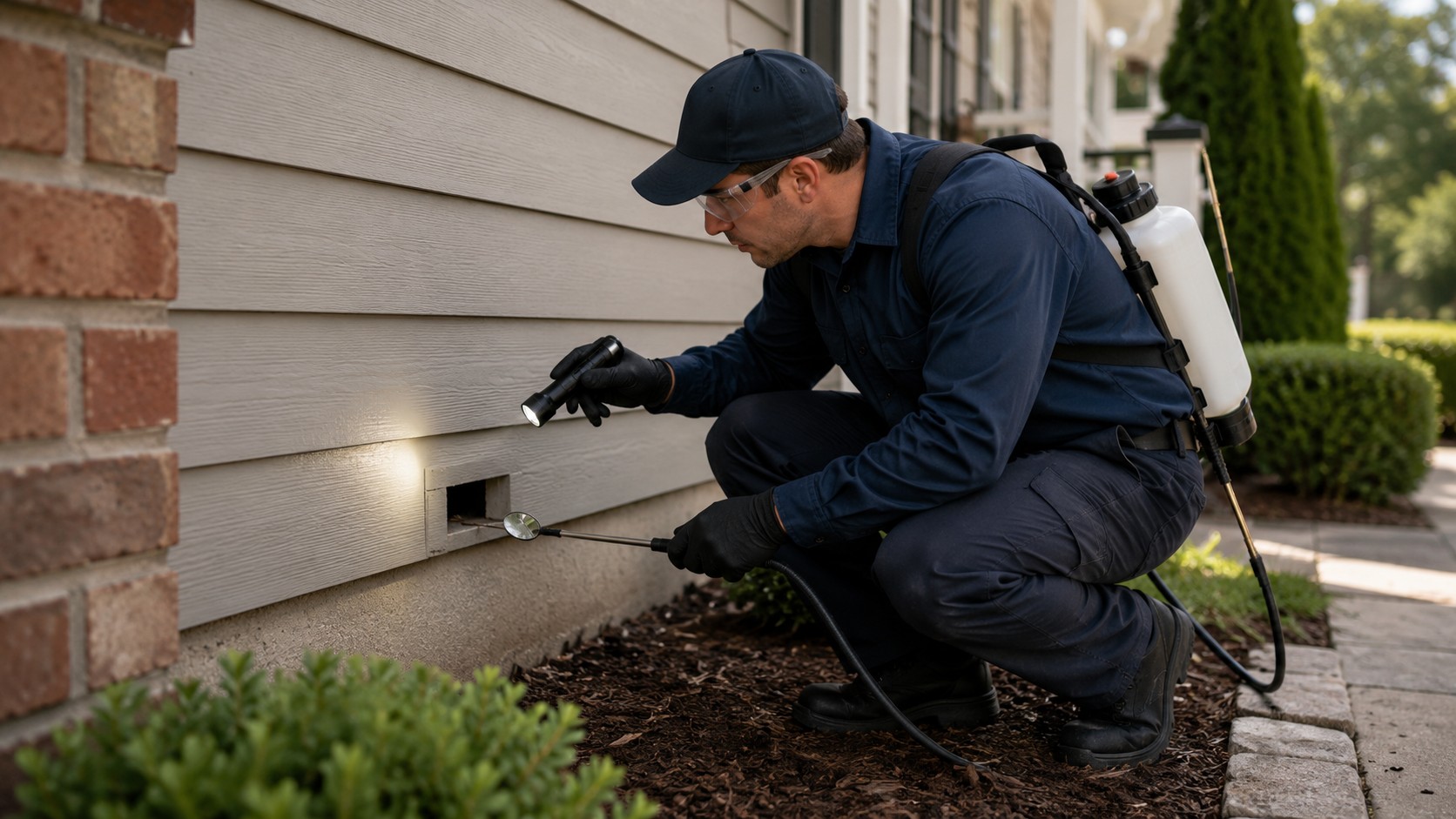
An inspection is mostly looking, tapping, and measuring moisture, not treatment on the spot. Knowing the order helps you follow what the inspector is ruling in or out.
- Start outside at the foundation. The inspector walks the perimeter looking for mud tubes, pencil-thick earthen tunnels termites build to travel between soil and wood while staying moist. Tubes on foundation walls, piers, and plumbing penetrations get noted and photographed.
- Check wood-to-soil contact. Deck posts, landscape timbers, firewood against the house, and mulch piled high against siding all shorten the distance between colony and structure. The inspector flags these conditions even when no active termites are found.
- Look inside where plumbing and framing meet. Crawlspaces, basements, and areas under bathrooms and kitchens get the closest attention, because moisture concentrates there. A flashlight, a probe, and a moisture meter are the usual tools.
- Tap and probe suspect wood. Sound wood rings solid. Damaged wood sounds hollow or crumbles under light pressure, with galleries that follow the grain and are packed with soil or mud.
- Map moisture and conducive conditions. Leaky pipes, poor drainage, and crawlspace humidity do not prove termites, but they explain why a colony would thrive in one spot and not another.
- Review findings and options in plain terms. You should hear whether activity is active, old, or absent, where it is, and what treatment or monitoring, if any, fits that finding. Ask for the map or notes, not just a verdict.
Signs worth noting before anyone arrives
Write down when you saw swarmers, where, and whether it followed rain. Save a few insects in a sealed container if you can do so safely, since identification settles the ant-versus-termite question quickly. Note any blistered paint, spongy baseboards, or floors that suddenly feel uneven, and point out recent plumbing leaks. Do not break open a mud tube hours before the visit and then clean it up. A disturbed tube is harder to read, and re-building activity is part of what an inspector may want to check on a follow-up.
What treatment usually means, and what it does not
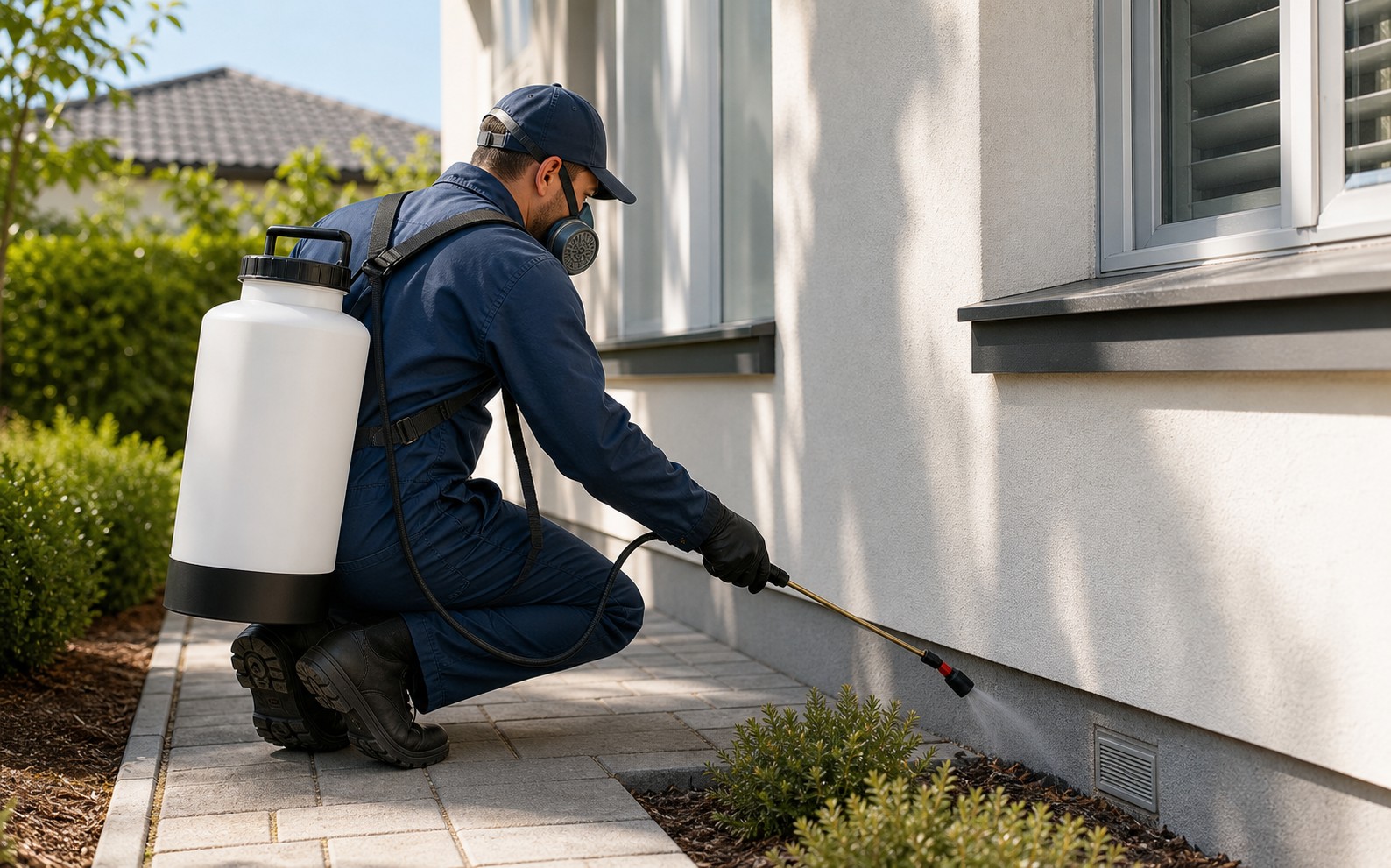
Where active termites are confirmed, common approaches include a liquid treatment applied in the soil around and under the structure to create a treated zone termites pass through, or a baiting system with stations checked over time. The right choice depends on construction, soil, drainage, and how much of the structure can be reached. Neither approach is a one-afternoon guarantee that no termite will ever return, which is why follow-up inspections matter. What does not work is spot-spraying swarmers with a household aerosol. That kills the insects you see and leaves the colony untouched.
Reducing the odds after the visit
Keep soil and mulch from burying the bottom edge of siding so the foundation stays visible for inspection. Fix leaks promptly, keep gutters moving water away from the house, and store firewood off the ground and away from walls. Remove stumps and buried wood near the foundation where practical. None of this makes a house termite-proof in Harrisburg soil, but it removes the moisture and cover termites prefer and makes the next inspection faster and clearer.
Common questions
Does a swarm mean my house is badly damaged?
Not necessarily. A swarm means a mature colony is nearby, which deserves a prompt inspection, but damage ranges from none found to significant, and only probing the wood can tell which.
Can I just treat the soil myself?
Surface products do not reach the zones a proper soil treatment targets, and misapplied products can complicate a later professional treatment. Identification and a full inspection should come first.
How often should a home be inspected for termites?
Annual inspection is the widely used practice in termite-heavy regions like the Carolinas, because colonies can establish between longer gaps and early findings are far simpler to address.
Photos in this guide are representative stock images.
← All guides from Green Pest Control← Back to Green Pest Control